

When a group of Pharisees, hoping to trap Jesus into incriminating himself, ask him whether a marriage can be lawfully dissolved, Jesus refuses to take the bait. Rather than haggle with them over the legality or illegality of their first-century version of no-fault divorce, Jesus takes them back to Genesis 1–2, which establishes the biblical-anthropological foundation for the sexual binary on which marriage rests. “Have you not read that he who created them from the beginning made them male and female, and said, ‘Therefore a man shall leave his father and his mother and hold fast to his wife, and the two shall become one flesh’? So they are no longer two but one flesh. What therefore God has joined together, let not man separate” (Matthew 19:4–6; ESV).
I apologize for using such a jargon-sounding phrase — “the biblical-anthropological foundation for the sexual binary” — but no other phrase will do. Had Jesus allowed himself to be distracted by emotional anecdotes about unhappy husbands or wives or political debates over freedom and autonomy or even historical appeals to what was allowed in the past, he would have ceded to his opponents the core of the issue. The Pharisees’ question cannot be properly addressed until the true nature of marriage is determined, but the true nature of marriage cannot be determined until the true nature of the partners within the marriage can be determined.
Enter anthropology: the “study of man.” While the word anthropology conjures for many images of primitive tribes and strange rituals, its deeper concern is (or at least should be) to determine who we are, how we are to function, and what our purpose is. Read anthropologically, Genesis 1:27 teaches that we human beings do not merely express ourselves as male and female; we are male and female. We were created as a complementary binary, and as such, Genesis 2:24 makes clear, we were intended from the beginning for union into a life-long, one-flesh covenant.
By grounding his answer in a firm biblical anthropology, Jesus is able to answer the Pharisees’ second question, with its seemingly “traditional” appeal to historical precedent: “They said to him, ‘Why then did Moses command one to give a certificate of divorce and to send her away?’ He said to them, ‘Because of your hardness of heart Moses allowed you to divorce your wives, but from the beginning it was not so. And I say to you: whoever divorces his wife, except for sexual immorality, and marries another, commits adultery’” (Matthew 19:7–9).
Notice that the exception Jesus allows flows directly out of the anthropological nature of man and marriage. If marriage marks a one-flesh union of two people who exist as a sexual binary, then if one of those two has sex with someone else (becomes one-flesh with them), the original one-flesh union cannot help but be ruptured. In any case, no legitimate debate about marriage and divorce can be had until the debaters can agree that marriage is a one-flesh union entered into by two members of a sexual binary. One of the reasons marriage today is in such a crisis, I would argue, is that we have lost track of the biblical-anthropological foundation for the sexual binary that is itself the foundation for marriage.
Dignity and Depravity
But marriage is not the only institution that is facing a crisis because society has forgotten what it is and who it is for. Education is in an equal state of crisis, for society has equally forgotten what it is and who it is for. We cannot understand the true nature of education until we cease willfully blinding ourselves to the true nature of the students we are responsible for educating. As with marriage and the sexes, the answer lies in the opening chapters of the Bible. According to Genesis 1–3, our students, like ourselves, are good and noble creatures made in the image of God (imago Dei) but fallen into sin and depravity. Once that is understood and accepted, it becomes clear that many of the pedagogical initiatives of the last century-and-a-half have gone awry.
First, if each of our students bears the imago Dei, then each possesses inherent worth and dignity. Schools that indoctrinate students into progressive ideologies do not treat them as ends-in-themselves but as means to the achieving of societal goals to which neither the student nor his parents have agreed. Some of those societal goals may be good and even “Christian” — hygiene, anti-smoking, anti-drinking, tolerance, community service — but they nevertheless represent a desire to shape students in accordance with whatever ideology is fashionable at the moment. Over time, those ideologies become increasingly unmoored from anything traditional or even natural and descend into outright social engineering: safe-sex, feminism, environmentalism, gay rights, multiculturalism, equity, identity politics, transgenderism, and so forth.
Most of the agendas I just listed hail from the political left, but the desire to use, herd, and manipulate students for man-made ends appears on the right as well. Utilitarian educators who privilege skills over wisdom, classroom management over character development, vocation over formation end up regulating rather than educating, training a workforce rather than nurturing virtuous, morally self-regulating citizens. The moment we forget students have intrinsic value apart from their functionality, we will treat them as tools for achieving our own dreams of the future. To borrow a metaphor from C. S. Lewis’s The Abolition of Man, we will prepare our little chicks, not as the mother hen does to fly, but as the poultry farm does for the table.
The only sure stay against utopian social engineering on the left and utilitarian regimentation on the right is the imago Dei. Only by constantly reminding ourselves that each child, to borrow a phrase from Victorian educator Charlotte Mason, is born a person will we have the necessary foundation and motivation to stop managing and start teaching, stop indoctrinating and start enculturating, stop trying to remake the next generation and start entrusting them with the traditions that have preserved our own humanity and that of our ancestors.
The only way to break the grip of DEI is to recover the imago DEI.
But that recovery alone is not enough. If we champion human value but forget human depravity, we will succumb to the destructive power of the self-esteem movement. Contrary to a century of progressive educational reforms, the proper goal of education is not to teach young people to think for themselves. As fallen creatures who stand in a state of rebellion against their Creator, students who are left alone “to define [their] own concept of existence, of meaning, of the universe, and of the mystery of human life” — to use the satanic language of Planned Parenthood of Southeastern Pennsylvania v. Casey (1992) — will make a shambles of themselves and their societies. The true goal of education is not to teach students to think for themselves, but to teach them to think rightly.
Physical, emotional, spiritual, moral, and intellectual limits are necessary if schools are to address, moderate, and hopefully lessen the full effects of the Fall. There must be rules, and those rules must be enforced, but a school that knows how to hold in creative tension our dignity and our depravity will do so by instilling an ethical center and a moral compass within its students. This is best accomplished by reading, meditating on, and wrestling with the Great Books that have been passed down to us from the past, the preservation and propagation of which marks one of the chief responsibilities of any educational system grounded in a proper biblical anthropology.
Authority, tradition, virtue, wisdom, duty: all come together in a vigorous study of the Great Books — what Matthew Arnold dubbed the best that has been thought and known in the world — and all play a key function in building the boundaries that stop individuals and societies from falling prey to their dark, self-destructive instincts and passions. Educators must not fan the flames of Original Sin in their students by encouraging them to abandon the social, ethical, aesthetic, and sexual “inhibitions” of their parents, churches, and communities in favor of expressive-autonomous individualism. That way lies cultural death.
Male and Female
And one more thing, something that would not need to be said had our society not unmoored itself from the biblical-anthropological foundation of the sexual binary. When educators forget that God made us male and female, they convince themselves that boys and girls can and should be educated in the exact same manner. As Christina Hoff Summers (The War Against Boys) and Leonard Sax (Boys Adrift) have documented, the attempt by school systems to repress the natural physicality and aggressiveness of boys, even to the point of labelling them difficult students and putting them on drugs, has caused American boys to lose their way and fall behind.
We are not androgynous souls trapped inside of male or female bodies. Our bodies as well as our souls are masculine or feminine and will continue to be so in the resurrection. Our students are neither animated bags of meat nor interchangeable cogs in a societal machine. They are full human beings, made male or female in the image of God, but fallen and in need of guidance, grounding, and guardrails.
As our anthropology shapes our view of marriage and divorce, so does it shape how and why we educate the next generation. For the sake of our future, we can no longer afford to cling to a materialistic, anti-biblical anthropology of ourselves and our children that robs them of their glorious potential and their desperate need for pedagogical fences.

Share This Article
-
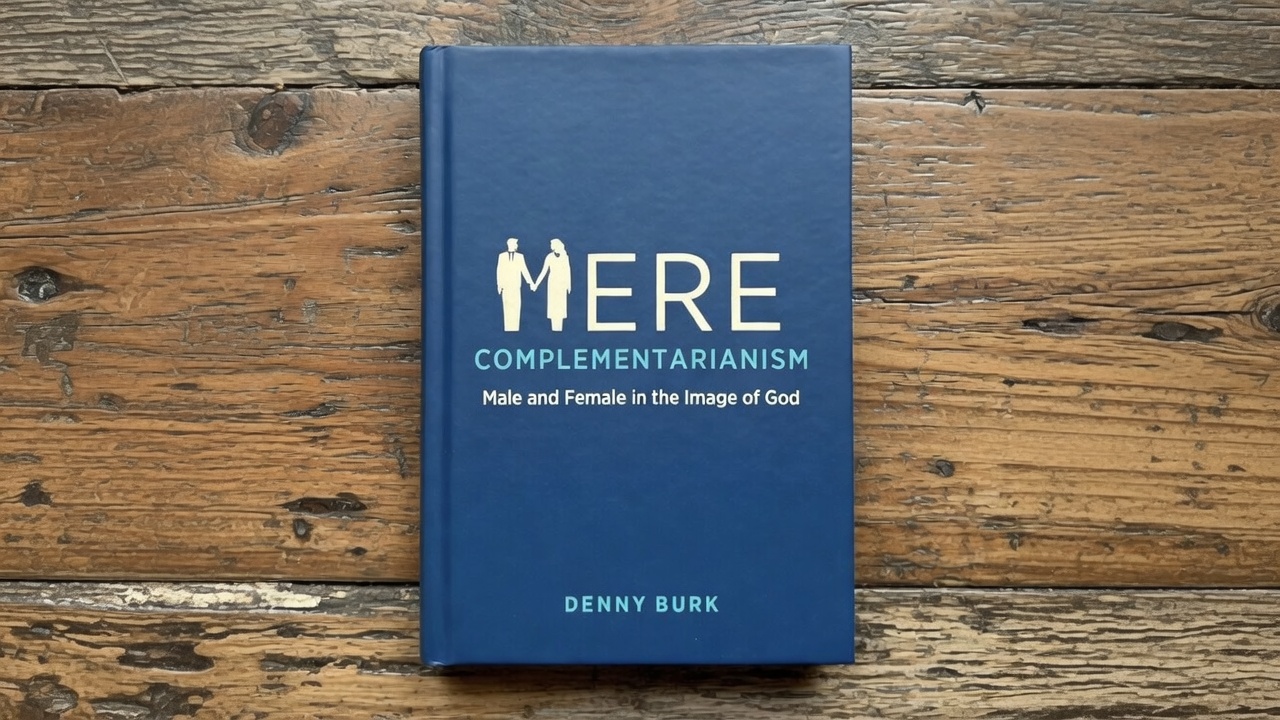
The Release of “Mere Complementarianism”
By Denny Burk
-

NEWS: SBC and PCA strengthen complementarian commitments
By Matt Damico
-

A New Evangelical Religion | Editorial
By Jonathan Swan