

There have been significant cultural shifts in American society regarding gender and sexual identity in the last decades.[1] Some awakened to these shifts in the aftermath of the Supreme Court’s Obergefell decision; for some, the transgender movement and the attendant pressures it placed on Christian churches and academic institutions were the wake-up call. Committed complementarians, however, understand that radical pressure with respect to a biblical understanding to sex and gender began much earlier. The long march of egalitarianism through our churches and Christian colleges and seminaries began long before 2015 and the political and social pressure that followed shortly thereafter.
Recently, I was speaking with someone who teaches at a well-known evangelical college in America. He told me that there is only a single complementation — one! — in its department of Biblical and Theological Studies. Changes like this do not come overnight. They do not happen as a result of one court decision or even after a few years of social pressure. They are the result of a decades-long shift in evangelical scholarship and publishing. The Council on Biblical Manhood and Womanhood has stood athwart this long march and has served to animate and solidify those holding to traditional biblical teaching.
Complementarians have had our own controversies and conversations over the last fifteen years. We have been engaged in a significant debate both within and outside our movement related to the Doctrine of God and Trinitarian Theology. Most of this has centered upon the Eternal Subordination of the Son (ESS) or Eternal Functional Subordination (EFS) understanding of the trinitarian relations, about which different conclusions have been drawn.
I do not intend to address this debate in any detail. Many have written in illuminating ways on these issues already, and the things that unite complementarians will be the focus of this essay.
We are united on the biblical teaching about human beings as male and female. We are united in our understanding of the particular and complementary roles that God has given to men and women in the home and in the church. We are united against female ordination to the offices of Christ’s church. This is an area in which many denominations, including my own, seem to be constantly battling over. We are united against an egalitarian flattening out of distinctions that God our wise Creator has made.
But, while I do not propose revisiting the EFS/ESS debate, I do intend to highlight a sad irony related to the debates about the doctrine of God. While we can all rejoice at the renewed attention within evangelicalism to the doctrine of God and to specific doctrines such as divine simplicity, inseparable operations, and divine incomprehensibility, this renewal of attention and scholarship in Theology Proper has been shockingly slow to address even more significant shifts in the ranks of evangelicalism.
Renaming God
In the midst of greater clarity in some areas, large areas of confusion continue to persist and to fester. Frankly, many who are most zealous to argue against EFS and ESS seem to have failed to consider far more obvious matters concerning the Bible’s portrayal of God. I was reminded of this when reading Amy Peeler’s chapter, “The Need for Nicene Exegesis,” in the recent volume, On Classical Trinitarianism, edited by Matthew Barrett.[2] Barrett’s book is a robust resource intended for the recovery of not only the classical doctrine of God, but of the specific preconditions and assumptions that lay behind it.
In her chapter, Peeler argues vigorously against EFS on both exegetical and theological grounds, concluding that it sits uneasily with the classical doctrine of God. But we cannot help to note that her work, and the approach to the doctrine of God represented by it, seems diametrically opposed to classical Christian teaching in significant and obvious ways.
Peeler’s most notable contribution to the doctrine of God is her 2022 volume, Women and the Gender of God.[3] In that book, she attempts to bring together the conclusions of modern gender studies with the doctrine of God — a significant hermeneutical departure from the classical tradition. Her conclusions are also theologically novel when considered against the sweep of Christian theology; but they are all too common among modern evangelical feminist writing on the doctrine of God.
To cite a few examples: In Peeler’s discussion of eternal generation — surely an important facet of classical trinitarianism — she advocates for multivalent ways of describing the Father’s generation of the Son. In this respect, she positively cites Jürgen Moltmann in his “radical denial of patriarchal monotheism.”[4] It is hard to imagine how this fits with any classical formulations of the generation of the Son. It is equally difficult to conceive of orthodox precommitments regarding metaphysics that encompass the “fruitful possibility” that Jesus Christ could have been intersex, which is among her suggestions.[5]
These are not incidental details. Peeler’s theological work has, as one of its aims, undermining a masculine view of God. She writes — in language that is increasingly prominent in evangelical literature — “That God is Parent or Mother, and not only Father, helps to work against the ‘phallacy’ that God is male.”[6] Along the same lines, Peeler affirms Kathryn Tanner’s suggestion to use “gender-bending gender imagery” when referring to God. She concludes, “Addressing the personal and eternal divine source as ‘Parent’ rather than ‘Father’ may more correctly name the relationship.”[7]
God as Father
What is at stake in all this renaming of God? What would it mean for our doctrine of God to sideline or disregard the consistent biblical address of God as Father? John Murray called the reality of God’s Fatherhood “the apex of grace and privilege.”[8] Herman Bavinck goes even further: “‘Father’ is thus the supreme revelation of God, and since the Father is made known to us by Jesus through the Spirit, the full, abundant revelation of God’s name is Trinitarian: Father, Son, and Holy Spirit.”[9]
The truth is that the term Father speaks first of what God is in Himself. God is by nature Father. He is not called Father merely by analogy to human fathers; rather, it works the other way: human fatherhood is a dim reflection of His perfect archetype. The apostle Paul writes that every family in heaven and on earth derives its name “from the Father of our Lord Jesus Christ” (Eph 3:14–15). As F. F. Bruce observed, “All other fatherhood is more or less an imperfect copy of His perfect fatherhood.”[10]
This notion of God as Father is essential to the Bible’s revelation of who the Triune God is. Gilles Emery explains: “To name someone father is to name him as father of someone; and to apply the name of Son to Christ is to describe him in his relation to his Father.”[11] This relational term, Father, cannot be separated or substituted if we are to keep the doctrine of the Trinity intact as it has been revealed to us. If we negotiate with the idea that Father is simply one of the multi-variant ways in which relations could be expressed, then we are tampering with the self-revelation of God in His essence. He is triune. He is Father, Son, and Holy Spirit.
But the Scriptures also use the language of God as Father to describe His relationship to His creation. In Malachi 2:10, the prophet declares: “Have we not all one Father? Has not one God created us?” Paul echoes this truth in Acts 17:28. Even more poignantly, this is the language that is given to us to describe God’s relationship to His redeemed people. We are to refer to God in prayer as, “Our Father” (Matt 6:9); and we do so knowing that, “your Father, who sees in secret will reward you” (Matt 6:6).
The Fatherhood of God and Adoption
After His resurrection, Jesus combines the truth about His own relations with the relationship between His people and their God: “I am ascending to my Father and your Father…” (John 20:17a). This truth is expressed powerfully in the Christian doctrine of adoption, all of which is unintelligible without the notion of God as Father. Francis Lyle, in Slaves, Citizens, and Sons, writes:
The profound truth of Roman adoption was that the adoptee was taken out of his previous state and placed in a new relationship of son with his new father. All his old debts were instantly cancelled, and, in effect, began a new life with the family. On the one hand, the new father owned all the new adoptee’s property and controlled his personal relationships and had his rights of discipline, but on the other hand he was liable for the actions of the adoptee and each of the other reciprocal duties of the relationship.[12]
Galatians 4:1–7 provides the key text for understanding the transition from slavery to sonship. Under the law, God’s people were like children under guardians — heirs in title but not yet in experience. Yet they are adopted as sons of a Father. The Spirit of adoption as sons causes us to cry out, “Abba! Father!” (Rom 8:15). The same Spirit who unites us to Christ teaches us to cry out confidently to God as Father. To know God as Father and ourselves as His children explains everything — our salvation, our worship, our obedience, our hope.
Historically, this truth of our adoption was not always given prominent attention, although the Fatherhood of God was never in question. Sinclair Ferguson notes that the medieval church paid little attention to the Christian life as sonship. It was Calvin and the later Reformed tradition which restored the biblical emphasis. Ferguson writes, “It was left to the Reformed theological tradition, following the lead of Calvin, to recover this biblical emphasis.”[13]
The later Reformed tradition certainly expanded upon it. As Johnson reminds us, William Ames devoted 27 points to adoption in The Marrow of Sacred Divinity. John Owen treated it in Communion with God, and even asserted that, “This is what Christ came to reveal — God as Father.” He also cited this revelation as leading to “the authoritative translation of a believer, by Jesus Christ, from the family of the world and Satan into the family of God, with all the privileges and advantages of that family.”[14]
The Westminster Confession of Faith also devotes a chapter to this glorious truth. In adoption, believers “enjoy the liberties and privileges of children of God, having his name put upon them, receive the Spirit of adoption, have access to the throne of grace with boldness, are enabled to cry ‘Abba, Father, are pitied, protected, provided for, and chastened by him, as by a father…”[15] None of this is possible apart from the central reality of the Fatherhood of God.
Because God is the Father of the Lord Jesus Christ and our Father, he gives us His name and we are gradually transformed into His likeness. 1 John 3:1 reminds us, “See what kind of love the Father has given to us, that we should be called children of God; and so we are…Beloved, we are God’s children now, and what we will be has not yet appeared, but we know that when he appears we shall be like him, because we shall see him as he is. And everyone who thus hopes in him purifies himself as he is pure” (1 John 3:1a, 2-3). As Wilhelmus à Brakel writes, “All that He is, He is for His children.”[16]
Because we are sons of a Father, we are also heirs (Gal 4:7). We are joint heirs with the Son who is the “heir of all things” (Rom 8:17; Heb 1:2). Knowing God as Father shapes every part of the Christian life. It gives us identity now and hope for eternity. It cannot be separated from who our Triune God is in Himself, or who He is in relation to His sons.
The Gospel and the Fatherhood of God
Τo call God “Father” is to confess the whole gospel in a single word. God’s fatherhood is not merely one feature of His character — it is who He is as the Triune Creator and Redeemer. It is the foundation of His relationship with His people.
To live, therefore, as children of our Father means to rest securely in His love. It means endeavoring to reflect His character in all aspects of life. As His sons, our whole life is to be an expression of our belonging to him and an outworking of His paternal care. Our obedience, our suffering, our prayer, and our rejoicing is an expression of our belonging to Him. Knowing God as Father is thus the most comprehensive and highest knowledge available to human creatures. It is the blessing of redemption; it provides the essential grammar of sanctification; and it is the source of our assurance of eternal life.
Conversely, to treat this notion of God as Father lightly, or to consider it merely one of the equally significant “multi-variant expressions” of who God is, is not merely to abandon one small detail of biblical revelation. It is to depart from the biblical revelation of who God is in Himself. It is to lose one of the principal ways in which our union with Christ in salvation is articulated in the gospel.
This must be the first priority when clarifying our doctrine of God. As our Mediator, the only begotten Son of God receives glory from His Father so we are made sons of our Father in heaven — partakers of the glory He has as our eternal Father of Lights. We are transformed from one degree of glory to another as we behold the Father in the face of the Son. May we never obscure or fail to maintain this glorious truth.
[1] The following is adapted from an address delivered on November 17, 2025 at the CBMW Banquet at the Evangelical Theological Society in Boston, Massachusetts.
[2] Matthew Barrett, ed., On Classical Trinitarianism: Retrieving the Nicene Doctrine of the Triune God (Downer’s Grove, IL, IVP, 2024).
[3] Amy Peeler, Women and the Gender of God (Grand Rapids, MI: Erdmans, 2022).
[4] Peeler, Women and the Gender of God, 100
[5] Peeler, Women and the Gender of God, 140.
[6] Peeler, Women and the Gender of God, 17.
[7] Peeler, Women and the Gender of God, 100-101.
[8] John Murray, Redemption: Accomplished and Applied (Grand Rapids: Eerdmans, 1955) 134.
[9] Herman Bavinck Reformed Dogmatics, vol 2: God and Creation (Grand Rapids: Baker, 2004) 97.
[10] F.F. Bruce, “Name,” in the New International Dictionary of New Testament Theology, ed Colin Brown (Grand Rapids, MI: Zondervan, 1976) 2:655.
[11] Gilles Emory, The Trinity: An Introduction to the Catholic Doctrine on the Triune God (Washington, CUA Press, 2019) 85.
[12] Francis Lyell, Slaves, Citizens, Sons: Legal Metaphors in the Epistles (Grand Rapids, MI: Zondervan, 1984) 83.
[13] Sinclair B. Ferguson, “The Reformed Doctrine of Sonship,” in Pulpit and People: Essays in Honour of William Still on His 75th Birthday, ed. Nisel M. de S. Cameron and Sinclair B. Ferguson (Edinburgh: Rutherford House, 1986) 82. Quoted from Terry L. Johnson, The Excellencies of God: Exploring and Enjoying His Attributes (Grand Rapids, MI: Reformation Heritage Books, 2022) 159–160.
[14] Terry L. Johnson, The Excellencies of God: Exploring and Enjoying His Attributes (Grand Rapids: Reformation Heritage Books, 2022) 160.
[15] Westminster Confession of Faith, Chapter XII.
[16] Wilhelmus à Brakel, The Christian’s Reasonable Service (Grand Rapids, MI: Reformation Heritage Books), 2:417.

Share This Article
-
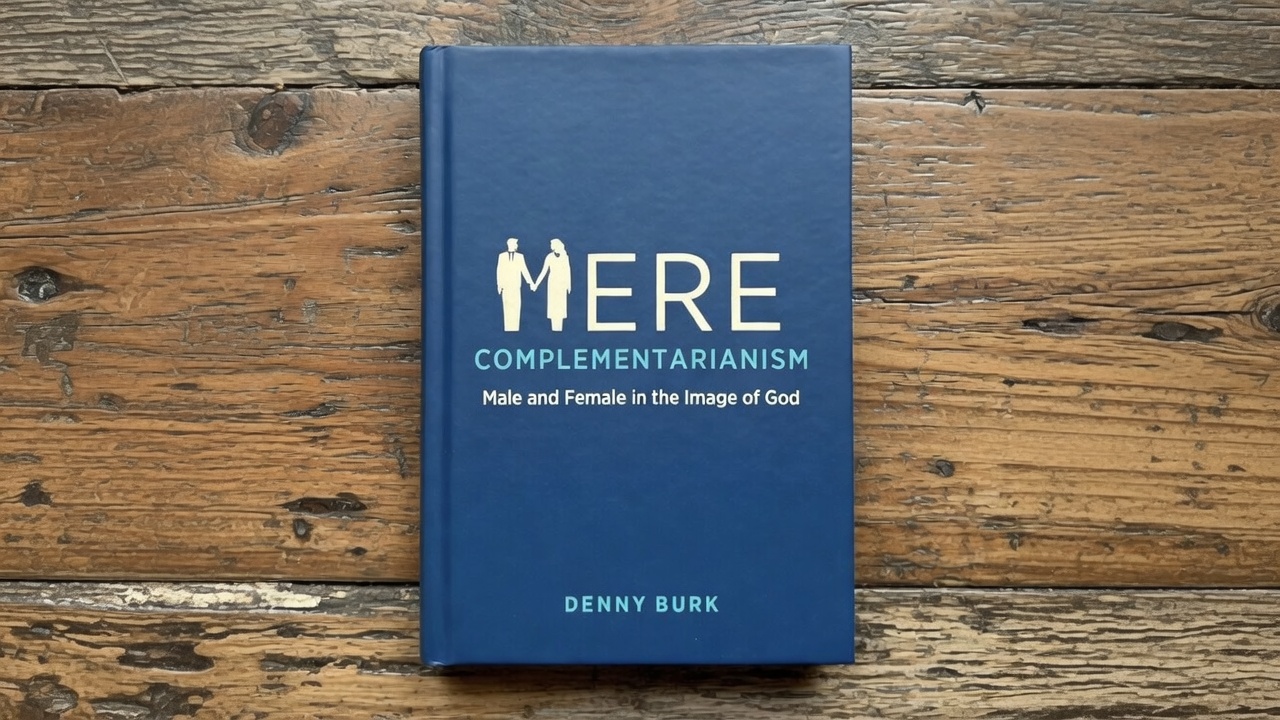
The Release of “Mere Complementarianism”
By Denny Burk
-

NEWS: SBC and PCA strengthen complementarian commitments
By Matt Damico
-

A New Evangelical Religion | Editorial
By Jonathan Swan