

In state after state, a quiet revolution is underway. Birth certificates are being rewritten. Mothers and fathers are being replaced by “intended parents” in legal language. Children are increasingly defined not through embodied origins, but through state-backed contracts.
If they are even aware of it, Americans have been told that these changes are necessary for adult equality. But beneath the surface lies a deeper question — one the church cannot afford to ignore: What is a human child?
The just-launched Greater Than Campaign to overturn gay marriage understands that this question is far more theological than political.[1] And the answer is grounded in embodiment: children come from one man and one woman.
Scripture begins with a simple but profound reality: “So God created man in His own image… male and female He created them” (Gen. 1:27). Sexed embodiment is not cosmetic. It is not a social script or a personal preference. It does something. It generates.
Male and female are ordered toward life. The difference between man and woman is not ornamental — it is procreative. It is the means by which humanity fulfills its first commission: “Be fruitful and multiply” (Gen. 1:28). Before there were clinics, courts, or contracts, there was this reality: new life comes from the union of a man and a woman. And because that union generates a child, it generates obligation.
That obligation was formalized by marriage. And parental rights — the recognition that the relationship between parent and child precedes the state — was fundamentally connected to that male/female union.Parenthood, therefore, is not something adults invent. It is something we discover in the body of the child.
But Genesis 3 introduces a fracture that still shapes our world. The serpent’s temptation invited the creature to become like the Creator — to define reality rather than receive it. Ever since then, human beings have chafed against the boundaries of embodiment. We resent limits. We resent dependence. We resent fertility. We resent infertility. And we want to summon or dismiss relationships that do not suit us. It is a rebellion against the created order — our attempt to be like God.
Nowhere is that rebellion more visible than in the modern redefinition of marriage and parenthood.For decades, technologies like contraception, abortion, and IVF have reflected a growing desire to control whether, when, and how life begins. One seeks to prevent life. One seeks to end life. One seeks to engineer life. But all share the same underlying claim: I rule children, not God.
What began as a technological breakthrough has become a legal one. In 2015, the Supreme Court’s decision in Obergefell v. Hodges redefined marriage as an adult-centered institution. The Court promised a “constellation of benefits” to same-sex couples. Some of those “benefits” required something deeper: children who would be raised apart from their mother or their father in the name of constitutional non-discrimination.
The problem is, children have refused to comply. Despite technological tinkering and Supreme Court pronouncements, children remain stubborn. They still come from one man and one woman. They still derive identity from that man and that woman. They are still most likely to be safe, loved, and developmentally supported when raised by that man and that woman.
Nonetheless, “equality” demanded that they lose one or the other. So the law was made to accomplish what biology would not — making two adults of the same sex parents of a child. That meant redefining parenthood itself. Since biology is inherently “bigoted” — it always insists on one man and one woman — the courts’ answer to equality in parenthood has increasingly become contract-based parenthood.
Now, if adults can assemble sperm, egg, and womb — and possess a valid contract — they can leave the hospital with an unrelated child. Parenthood is no longer recognized. It is assigned. And once it can be assigned, it can be transferred, negotiated, and sold.
The legalization of gay marriage led directly to child commodification. It assigned parentage rather than recognizing it. Generation is no longer received as a gift within created limits. Children are no longer begotten. They are made.
To commission a child is to assume sovereignty. It treats generation as a project rather than a gift. It exalts adult desire and sexual identity as god — and that god always requires child sacrifice.
This is why the Greater Than Campaign is necessary — and why Christians should lead it. At its core, the campaign is not asking the church to invent a new ethic. It is calling the church to defend what has always been true: that children have a right to the mother and father who brought them into existence — and to insist that the state recognize that reality rather than replace it.
When we honor those rights, children thrive. When we sever children from their parents — legally and technologically — they suffer. This is not a partisan preference. It is a recognition of how human children actually work.
The tragedy of our moment is not merely that we have redefined marriage. It is that we have normalized the intentional deprivation of children — and called it progress. The Greater Than Campaign confronts that inversion directly. It insists that every question about marriage and family must begin not with what adults want, but the embodied realities of the child.
Those realities aren’t flexible. They’re fixed.
Children need their mother and father. They need their identity anchored in reality, not constructed by law. They need to be legally bound to the two people responsible for their existence. And they need the society-wide expectation that their mother and father will commit to one another for life.
For Christians, this is no mere social preference. It is obedience. To affirm embodied parenthood is to affirm creation itself. To defend marriage between a man and a woman is to defend the created order — and the children who result from it.
The question is not whether we must take marriage back. It is whether the Church will have the courage to lead. Because this is not ultimately a political question. It is a theological one — with profound legal consequences for children.
What we believe about marriage determines what the law will recognize about parenthood. And what the law recognizes about parenthood determines whether children are protected — or treated as products.
[1] https://greaterthancampaign.com.

Share This Article
-
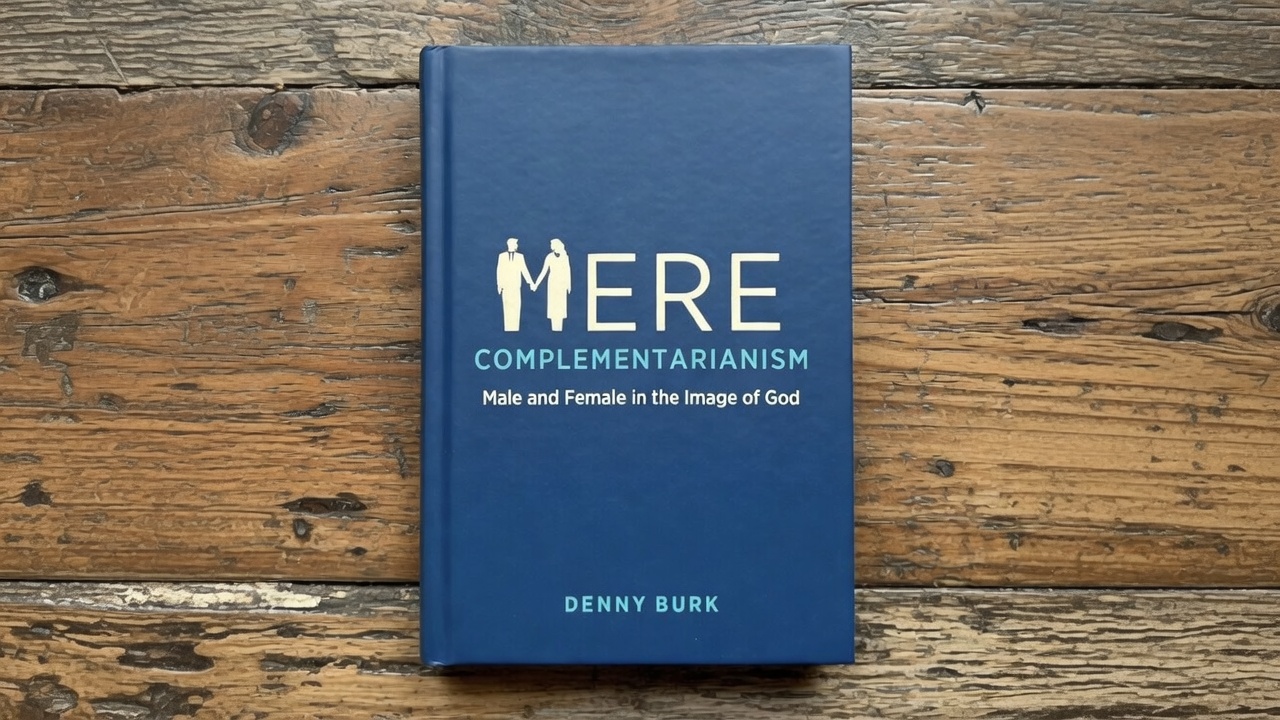
The Release of “Mere Complementarianism”
By Denny Burk
-

NEWS: SBC and PCA strengthen complementarian commitments
By Matt Damico
-

A New Evangelical Religion | Editorial
By Jonathan Swan