

The church’s focus on matters of sexuality and gender seems to some like an unhealthy preoccupation. It is not difficult to find critics both inside and outside the church expressing incredulity and even mockery over the time and energy that churches, denominations, and various Christian ministries have dedicated to these subjects. But we didn’t start the fire. The reason there has been an uptick in Christian resources focusing on gender, marriage, sexuality, the body, etc. is because of the unprecedented attempts to upend even the most basic facts of life that everyone in the world knew until about fifteen minutes ago. The boundaries are being pushed so furiously that the debate over homosexuality seems almost passé. Indeed, many celebrity evangelicals have now openly affirmed homosexuality as though to do otherwise is against the very spirit of Christian charity.
Transgressing God’s Boundaries
Ever the transgressors, men and women have sought not only to push God’s boundaries, but to obliterate them entirely. From the beginning, sin has been humanity’s foolish gamble at self-deification. It is an attempt to be a law unto ourselves through the deliberate rejection of God’s law. The first sin, as described in Genesis 3, was an attempt to be like God in a way that was never intended for humanity.
Transgressing the boundaries God had established regarding sexuality and marriage is a reach for godhood just as much as the more recent gender rebellion is. In these ways, men and women are seeking to usurp God’s wise and gracious authority while simultaneously imagining themselves to be gods.
For this reason, we may understand homosexuality and transgenderism as species of paganism. They are the fruit of the denial of the first two chapters of Genesis. They are deliberate movements away from the order, harmony, and life-giving goodness of God’s design in favor of the chaos and dis-integration of pagan myths. God-given complementarity is traded away for sin-induced confusion.
Now we are told that women can be men, that men can give birth, and that removing the sexual organs from healthy children and mutilating their bodies is not only acceptable but of vital necessity for their well-being. Such grave deceptions have caused confusion not just “out there,” but even within the church — especially among our children. And so the need for faithful, clear, and focused catechesis concerning what it means to be man and woman in the image of God, the purpose of the body, sexuality, and marriage have never been more pressing.
When I was in high school in the 1980s, it was not costly to affirm the sinfulness of homosexuality. Most of my unbelieving friends agreed. But today, homosexuality is viewed as an unmitigated good. Signs in our neighbors’ yards declare, “In this house we believe that love is love.” And without any sense of irony at all, those same signs state that “we believe in science.”
Sexual liberation (even liberation from one’s own body) has become part of the cultural water in which we swim, what Charles Taylor referred to as our “social imaginary.” And the gender revolution is achieving the same status. Again, when I was younger, transgenderism was not even on the radar beyond our knowledge that there were “cross dressers.” The idea that someone could be a woman trapped in a man’s body was ridiculous to everyone except for the rare guest on the Phil Donahue Show.
In those days, the widely accepted biblical prohibitions against such sins as homosexuality had more to do with the so-called “yuck factor” than a deeply held sense of loyalty to God and an understanding of his Word and his world. And while some may wish that more young people today had the same sort of reflexive yuck factor of past generations, what is truly needed is better preaching and teaching on the doctrines of creation and mankind. What is needed is better instruction on the telos or “end” of the body, sexuality, and marriage.
The good news is that the Scriptures explain why God has placed boundaries on human sexual expression. The Bible tells us that the complementarity of male and female is essential to our being God’s image bearers. God tells us why marriage is solely for a man and woman. And it is all good news. God’s pattern for us in these matters leads, quite literally, to life. His boundaries protect our physical health and lead to the flourishing of human communities, providing a foundation for societal stability. His design even publicly displays the love that Christ has for his church.
Discarding God’s Design
We do not have to wonder what happens when God’s design for sexuality, marriage, and gender are repeatedly violated. The evidence is all around us and has been for as long as men and women have sought to violate that design. The toll such violations exact upon the human body are devastating as any perusal of the CDC’s website demonstrates. Not only that, violations of God’s design for sexuality and marriage leads to the weakening of the social fabric. Fatherlessness is one of the chief factors contributing to violence, promiscuity, and poverty. But in addition to these social ills, we must now consider what will be the outcome for a society that allows doctors to perform double mastectomies on healthy twelve year old girls and castrate young boys.
When God’s good design for the body is cast aside, life itself is inevitably devalued. Deemed to be “human but less than human,” our little ones in the womb are destroyed by the millions. Such a violent transgression against the natural affection between parent and child has no doubt contributed to the ongoing tragedy of child abuse and fueled the growing practice of doctor assisted killing of the aged, sick, and depressed. In such a world, children become little more than a lifestyle ornament. The real Handmaid’s Tale is enacted each day as homosexual couples purchase babies from women functioning simply as gestating units.
With such clear benefits to God’s design and the tragic detriments to violating it, one wonders why men and women continue to press so hard into such death-dealing transgressions. But this is simply the deadly cycle of sin. One transgression leads to another. Sin metastasizes. As God’s signature in nature is cast aside, the horrors visited upon the human body, the family, and society are inevitable and increasingly corrosive.
Telling a Better Story
In light of these cultural pathologies, pastors must be equipped to do more than simply repeat the Scriptural prohibitions against sexual sin. We must also frame those prohibitions in the same ways that the Scriptures frame them. Certainly, the biblical prohibitions against sexual sins and the boundaries God places around how we may and may not use our bodies must be stated clearly. But the biblical prescriptions for the use of the body and the boundaries around sexual intimacy are not commands to be abstracted from the rest of Scripture. Those commands come to us within the story the Bible tells about God and humanity, sin and salvation. The Bible tells the story that explains why God designed sexual intimacy for the blessing of a man and woman in the bonds of marriage for their mutual pleasure, the deepening of their love for one another, and with an eye toward expanding the human family.
The Bible tells us — quite beautifully and in a way that is both intellectually and spiritually satisfying — why God created us as complementary gendered persons. The Bible tells us why God has imposed clear boundaries around the use of our bodies. God’s Word places the telos of the body, sexuality, and marriage within its meta-narrative — the grand all-encompassing story that functions in part to interpret all of life. This biblical meta-narrative explains God’s very clear “No” by way of his blessed “Yes!” And this story must be proclaimed in our pulpits, in our Sunday School classes, and in our homes.
One of the great advantages that the Bible has is its age. Christopher Watkin observes that the Bible, because it is not a product of our culture, does not share our culture’s blind spots. Watkin writes:
[The Bible] was, in fact, written over a period of more than a millennium to and about communities that are by turns nomadic, agrarian, monarchical, exiled, and occupied. This cultural and historical diversity means that the Bible — in contrast to almost all current theoretical approaches or ‘theories’ — is not hidebound by any single age or any single cultural context, least of all our own.[1]
What this means for our present purposes is that the story the Bible tells about sexuality, gender, and what it means to be human is not bound to any one nation, culture, or epoch. It has the advantage of transcending national, cultural, or chronological confines. It translates into the cultures and countries of all the peoples of the world.
Meeting the Challenges
A big challenge for Christians is that the story the world tells about sexuality, gender, and what it means to be human is an easy one to tell. It is highly appealing emotionally. It involves no complexity. It fits easily on yard signs and car bumpers. What is more, the world’s story is being told through movies, television programs, journalists, music, teachers, commercials, and politicians. What this means practically is that we will not be able to out argue most of the people we encounter who believe the world’s story. What we must learn to do is out-narrate the world.
The good news is that because the story we tell is God’s story, it is infinitely more powerful and has the added advantage of being true. The challenge is that the story the Bible tells is not nearly as simple as the story the world tells. God’s story requires thought and disciplined emotions — things we don’t especially excel in at our present moment. God’s story requires time to listen and learn. It requires a reckoning with the Triune God of Scripture over all his pagan competitors. It means one must be willing to grapple with the reality of sin and a gracious salvation.
There is yet another great advantage to the Bible’s story, however, which is joined to its truthfulness: it is written upon the conscience of all humanity. Though sinful humanity vigorously suppresses the truth in unrighteousness (Rom. 1:18ff), it is nevertheless true that everyone has a conscience haunted by the law of God which is written on their heart — even the heart of the unbeliever (Rom. 2:12–16). That means that the conscience is a vitally important element for the church’s apologetic on these matters. When we teach and preach the truth of God’s design for the body, gender, sexuality, and marriage, we are touching on truths that God has written not only in his Word but in nature and upon the human conscience.
God’s story is far more satisfying and consistent than the world’s story. It tells us simultaneously of both the enormous worth of human individuals and their comprehensive corruption brought about by sin. It is a harder, more challenging, more complex, but infinitely better story than the one the world tells. And the better story the Bible tells is actually able to explain more. It is able to tell us what life is all about and why we are here. It is a story which explains why things are not the way they are supposed to be. And best of all, it is a story which tells how God is going to make it right again.
So pastors, preach and teach God’s better story. It is true. It is powerful. It is satisfying. It is a story written upon and confirmed in nature and upon the human conscience. It is a story just waiting to be heard and believed.
[1] Christopher Watkin, Thinking Through Creation: Genesis 1 & 2 as Tools of Cultural Critique (Philipsburg, NJ: P&R, 2017).

Share This Article
-
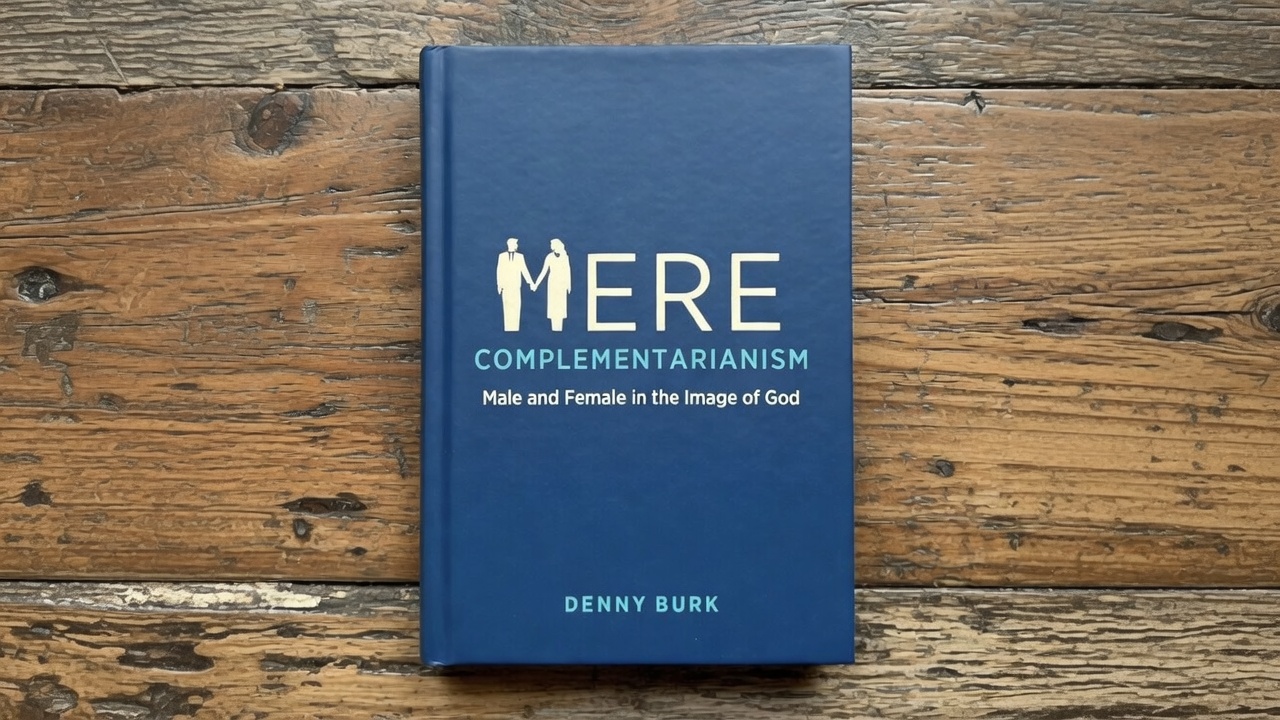
The Release of “Mere Complementarianism”
By Denny Burk
-

NEWS: SBC and PCA strengthen complementarian commitments
By Matt Damico
-

A New Evangelical Religion | Editorial
By Jonathan Swan