

The purpose of this brief essay is to identify some of the masculine qualities designed by God that fit a man for the arduous task of shepherding his flock (Acts 20:28; 1 Pet 5:1–2). This paper assumes that readers are biblical complementarians, and therefore does not seek to directly address egalitarian objections.
Strength and Courage
From the beginning, God designed men physically, mentally, and emotionally to be leaders, warriors, disciplinarians, builders, defenders of the faith, and protectors of the weak. For such crucial roles men were endowed by the Creator with physical bodily strength and inner courage.
For example, as a teenage boy, David knew that he must protect his father’s sheep from wild beasts. In his own words spoken to King Saul, he states that “when there came a lion, or a bear, and took a lamb from the flock, I went after him and struck him and delivered it out of his mouth. And if he arose against me, I caught him by his beard and struck him and killed him” (1 Sam 17:34–35). By killing the lion and bear, David demonstrated masculine, daring courage and physical strength. At risk to his life, he protected his father’s helpless sheep from savage predators.
Our Lord Jesus Christ fearlessly entered the Temple court and with a whip of cords, single-handedly drove out the moneychangers, and restored the temple to its original purpose — that it be a house of prayer, worship, and teaching (John 2:13–17; Mark 11:17). Throughout his life, Jesus demonstrated masculine strength and bold courage in the face of grave danger.
Guard God’s Flock: Fierce Wolves Are Coming
On the shores of Miletus, the Apostle to the Gentiles summoned the Ephesian elders for a final farewell meeting. For nearly three years, these elders worked intimately with Paul in evangelism and pastoral care (Acts 20:17–38).
In his farewell address, Paul charged the elders to guard God’s flock. He then solemnly warned them that “fierce wolves” will attack the flock from without. But even more frightening, these wolves will also attack from within as false teachers who will arise “speaking twisted things, to draw the disciples after them” (Acts 20:28–30). Fierce battles for the lives of God’s people and the truths of the gospel lie ahead.
Note that these are “fierce wolves,” a pack of hungry wolves working together to consume God’s people. From personal experience, I can say that false teachers are frightening people to confront. They speak “twisted things” (Acts 20:30), that is, they distort and pervert apostolic, orthodox doctrine, the standard of truth. They are slippery creatures who cannot be easily pinned down; they are experts at double-talk and diversion. Masters of subtlety and novelty, false teachers mix truth with error and confuse people with half-truths and complex ideas. They have a way of wearing people down with their arguments so that most people capitulate, weary of trying to argue.
To protect the local church from fierce wolves, there need to be shepherds who are mentally and emotionally capable of engaging in highly stressful theological and philosophical debate with powerful and wearying opponents. That is why one of the biblical qualifications for a pastoral elder (often overlooked) is that he must be able to “rebuke those who contradict” the truths of the gospel and to silence them because, as Paul says, they are “upsetting whole families” with their twisted doctrines (Titus 1:9, 11). Remember, too, that behind these fierce wolves are demonic powers: “For we do not wrestle against flesh and blood, but against the rulers, against the authorities, against the cosmic powers over this present darkness, against the spiritual forces of evil in the heavenly places” (Eph 6:12; see also 1 Tim 4:1).
To fight false teachers head-on takes strength and courage, and God has fitted men of strong character for the responsibility to chase off sheep-eating wolves and protect God’s flock from being devoured as food. Strength and courage are necessary male qualities for effective pastoral leadership, exercising church discipline, facing angry opponents, and handling spiritual warfare. Just as God has given men the responsibility to physically protect those in their care, so he has given qualified men as pastors to spiritually care for those under their care.
Hard Work
One of the first things that we learn about God’s design for the man is that he was made “to work” the ground and to “keep it” (Gen 2:15; 3:17–19). A masculine quality needed to fit one for pastoral leadership is the ability to work long hours and bear the heavy burdens of people’s complaints and problems.
In Acts 20, Paul reminded the elders of his own example of hard work and generous care for the weak: “You yourselves know that these hands ministered to my necessities and to those who were with me. In all things I have shown you that by working hard in this way we must help the weak and remember the words of the Lord Jesus, how he himself said, ‘It is more blessed to give than to receive’” (Acts 20:34–35; also 4:35–37; 6:3–6; Gal 2:10). Paul’s example of hard work is meant to encourage the elders to work hard (at both their employment and church responsibilities) and to use their earnings to support weak and needy members.
In the newly established church in Thessalonica, Paul identified some men who were laboring diligently for the welfare of the new congregation. Specifically, they were providing leadership and instruction. Paul wanted these laboring brothers to be acknowledged and loved for their work: “We ask you, brothers, to respect those who labor among you and are over you in the Lord and admonish you, and to esteem them very highly in love because of their work” (1 Thess 5:12–13). The verb “labor” often describes manual labor. This term denotes toil and strenuous work that results in weariness and fatigue. The term reveals an important characteristic of a Christian leader: laboriousness. Part of the male constitution is a willingness and ability to work long, hard hours and to carry other people’s heavy burdens on their shoulders.
Hard work and generous care for the needy are God-given masculine qualities that should be an example to the whole church body to emulate.
Paul’s command that husband’s “love your wives, as Christ loved the church and gave himself up for her” (Eph 5:25) is thus fitting for men. Only through arduous, self-giving labor on behalf of his wife will a husband be able to fulfill this command. It is no surprise that the office of pastor likewise requires intense labor on behalf of Christ’s bride.
The Labor of Teaching
The same word for “labor” in 1 Thessalonians 5:12 is also used of the elders in 1 Timothy 5:17–18: “Let the elders who rule well [lead well] be considered worthy of double honor, especially those who labor in preaching and teaching. For the scripture says, ‘You shall not muzzle an ox when it treads out the grain,’ and, ‘The laborer deserves his wages.’” Effective teachers put in long hours of concentrated study, lots of reading, sermon preparation, and demanding teaching situations. It is time-consuming work that requires a great deal of self-discipline. Teaching is labor-intensive work.
A teacher is also an authority figure. Thus, only men, precisely because they are men, are officially permitted to teach the full gathered congregation (1 Tim 2:8–3:3). Women are not “to teach or exercise authority over a man” in the gathered assembly (1 Tim 2:12).
As teachers of God’s holy Word, men project a voice of authority (a literal deeper voice) and strength of presence. Furthermore, since God has fitted men for this role, they have a natural inclination towards technical doctrinal issues, a truth that evinced itself throughout civilizational history. It is not surprising that the vast majority of systematic theologies and philosophy books have been written by men and studied by men.
Fatherly and Husbandly Status and Authority
Fathers possess the authority to discipline and instruct their children: “Fathers, do not provoke your children to anger, but bring them up in the discipline and instruction of the Lord” (Eph 6:4; also Prov 4:1–6; Col 3:21); “For what son is there whom his father does not discipline” (Heb 12:7; see too 1 Thess 2:10)? The Scripture further declares that the husband is “the head of the wife” (Eph 5:23; see too 1 Cor 11:3; 1 Pet 3:6). To be a “head” is to be the leader of the wife which emphasizes authority and direction. In biblical terms, the headship of the husband is to be uniquely a Christ-like, loving, uplifting, self-sacrificing headship — never abusive or demeaning, which is sin.
To be the leader to his wife and father to his children, God created the man with the necessary bodily, mental, and emotional qualities for the leadership role in the family. Having fatherly and husbandly authority naturally fits men for the larger responsibility of leading and teaching a local congregation made up of many families. In fact, being male is one of the assumed qualifications for being an elder-overseer (1 Tim 2:8–3:7), but being male alone does not qualify a man for eldership-leadership in the church. There are other specific God-given qualifications required of a man for the office of spiritual oversight (1 Tim 3:1–7; Titus 1:5–9).
For official appointment to the eldership of a church, fatherly and husbandly status and authority must be found to be irreproachable and competent: “He must manage (lead) his own household well, with all dignity, keeping his children submissive, for if someone does not know how to manage (lead) his own household, how will he care for God’s church?” (1 Tim 3:4–5). There is a clear parallel here between masculine leadership in the individual family and masculine leadership in the extended family, the local church.
Before a man is ever examined (1 Tim 3:10) and appointed to the pastoral leadership in a church, he will have had tried and tested experience in his own home as a husband and father (1 Tim 3:5; assuming he has a wife and children). An elder’s pastoral oversight of God’s church is more like the oversight of a caring shepherd or a loving father than a CEO executive over a large corporation or a military officer over those under his command. Elders are like fathers to the church, and churches desperately need mature, spiritual fathers to teach, rebuke, discipline, and protect.
Men Fit to Serve
It is clear from Scripture that God created the man and the woman equal in worth and in bearing the divine image of God, yet different in their unique roles. God assigned these roles that together they fill the earth with people who also bear the divine image. The differences between men and women are real and significant.
In the marriage partnership, God created the husband to lead, protect, and provide, and wives to submit, nurture, and maintain the home. In marriage, the man is the head of the wife (Eph 5:23) and leader of the family (1 Tim 3:4–5). God designed the man physically, mentally, and emotionally to be the family leader, protector, and provider, and it must be added, a leader of the larger community of God’s people, the church. The woman also was uniquely designed by God for her role as wife, mother, and godly influencer and supporter of the larger community of God’s people, the church (1 Tim 2:9–15).
In the household of God, the local church (1 Tim 3:15), men have been created by God to be defenders of the faith (guarding the church from fierce wolves, Acts 20:29–30), to be protectors of the weak (working hard and giving generously to the needy, Acts 20:35), teachers of sound biblical theology (laboring in preaching and teaching, 1 Tim 5:17; Titus 1:9), and shepherd-leaders of the people God (1 Pet 5:1–2). Let us, as Paul said to Timothy: “Command and teach these things” (1 Tim 4:11).

Share This Article
-
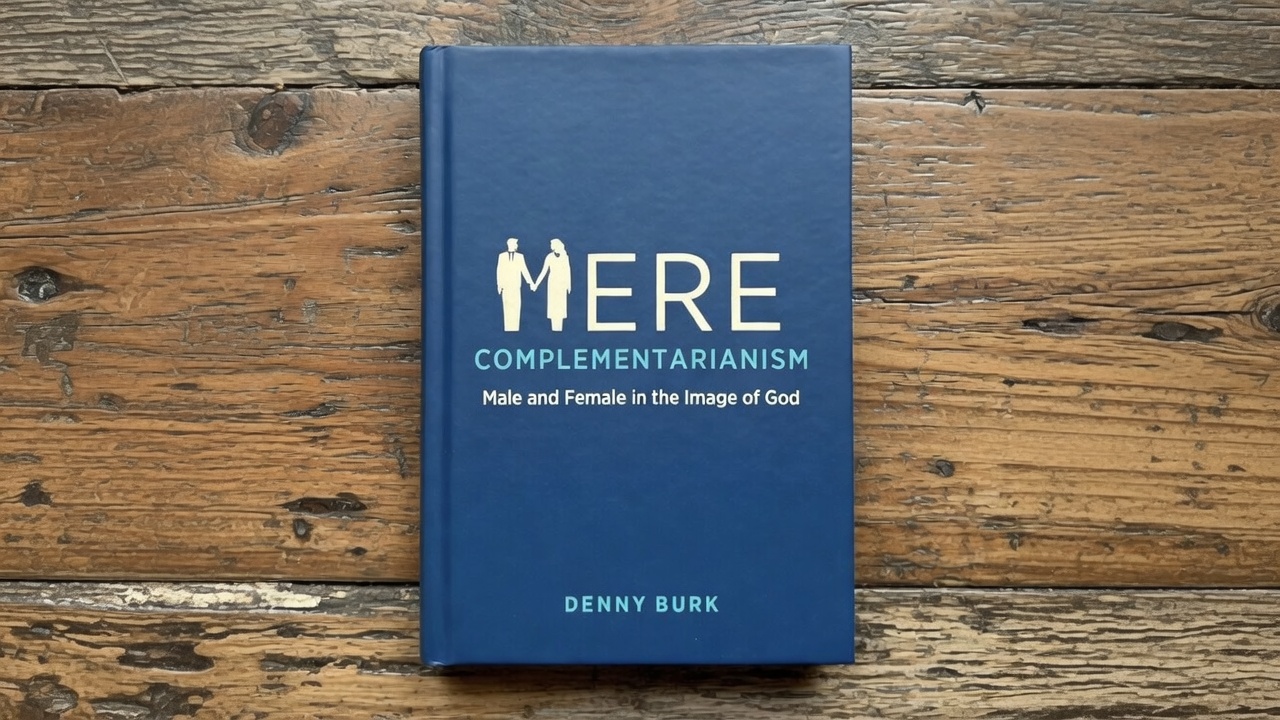
The Release of “Mere Complementarianism”
By Denny Burk
-

NEWS: SBC and PCA strengthen complementarian commitments
By Matt Damico
-

A New Evangelical Religion | Editorial
By Jonathan Swan